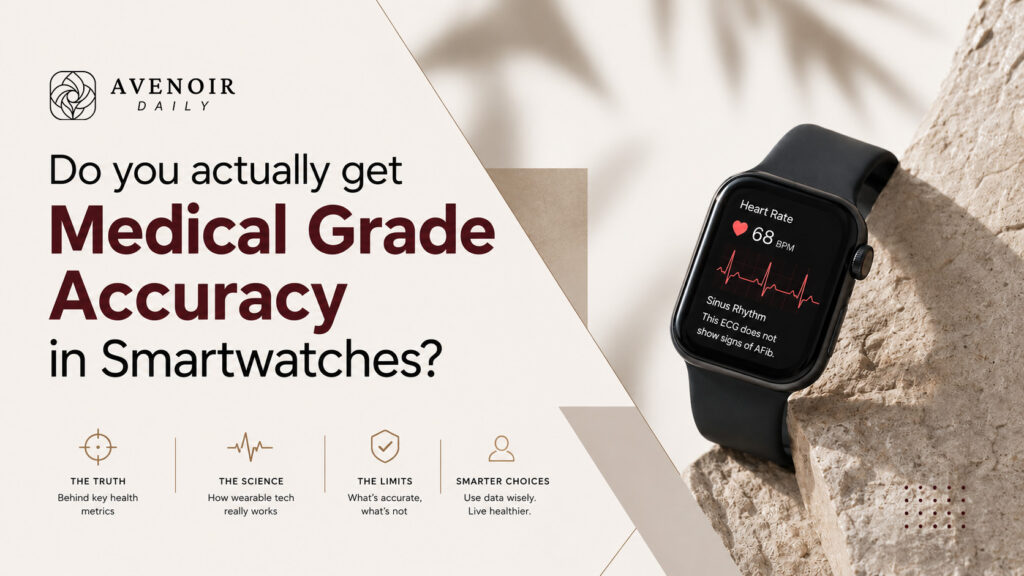
Medical-Grade Accuracy in Smartwatches has reached a fever pitch. If you glance at the slick promotional campaigns dominating the U.S. market, you’ll be led to believe that a modern smartwatch is no longer just a piece of lifestyle tech—it is a fully functioning, miniature emergency room strapped to your wrist. Brands routinely promise to monitor your heart, screen your sleep for dangerous breathing drops, track your blood pressure, and use predictive AI to map your entire biological future.
But when you cut through the editorial gloss and look at the cold, hard reality of consumer wellness in 2026, a vital question emerges: Where does consumer convenience end, and genuine clinical utility begin? If you are stuck trying to choose between the seamless smartphone integration of iOS or the deep athletic grit of a multi-week battery, explore our definitive hardware and philosophy breakdown: Apple Watch vs. Garmin Watch: The Quiet Luxury of True Utility.
For the modern professional who views tech as an investment in personal longevity, making an uncorrupted, data-driven decision is crucial. Let’s look past the corporate hype cycles and analyze the structural facts behind what these devices can actually achieve under the hood.
Table of Contents
Defining the Baseline: What Is Medical-Grade Accuracy in Smartwatches?
Before diving into the data, we must strip away the marketing hype. When a wearable brand claims their device delivers medical-grade accuracy in smartwatches, they are playing a subtle semantic game that every consumer needs to understand.
To put it plainly, medical-grade accuracy on the wrist does not mean your watch functions as a miniature doctor. Instead, it means a specific sensor or algorithm on that device has been tested in controlled environments and proven to match the directional tracking of clinical hospital equipment within an acceptable, legally validated margin of error.
Understanding this distinction matters for three critical reasons:
- Screening vs. Diagnosis: Certified smartwatches act as proactive screening tools to flag anomalies (like an irregular heart rhythm or blood oxygen drops), but they are not diagnostic instruments capable of identifying a disease.
- The Regulatory Gap: There is a massive legal difference between a device being FDA approved (highly restricted, life-sustaining medical equipment) and FDA cleared (consumer tech proven to be “substantially equivalent” to existing baseline trackers). Smartwatches only receive FDA clearance for specific screening features.
- Avoiding the False Alarm Trap: Over-interpreting basic wearable data can trigger unnecessary anxiety or cause healthy users to flood the U.S. medical system over minor, transient reading spikes.
Think of medical-grade tracking on a wearable like an automated home smoke detector. It cannot tell you what started the fire or how to put it out—but it screams loud enough to ensure you consult the professionals before it is too late. By understanding the true parameters of this metric, you can shift from chasing a arbitrary digital health score to having an informed, data-driven conversation with your actual doctor.
The Core Metric Breakdown: What’s Cleared vs. What’s Guesswork
The single biggest piece of misinformation in the wearable industry is the conflation of a “health metric” with a “medical diagnosis.” In the United States, the ultimate baseline for safety and accuracy is the Food and Drug Administration (FDA). However, FDA clearance for a consumer device rarely means it has achieved the absolute, hospital-grade precision of a dedicated clinical diagnostic machine.
| Feature | Current FDA Status (2026) | Real-World Clinical Utility |
|---|---|---|
| Single-Lead ECG & AFib Detection | FDA-Cleared | ~95–98% accurate screening tool |
| Irregular Heart Rhythm Alerts | FDA-Cleared | Continuous background screening |
| Sleep Apnea Risk Notifications | FDA-Authorized (Select Models) | Identifies consistent SpO2 drops |
| Blood Pressure Tracking | Software-Locked / Directional | Estimates |
The Cardiac Truth: ECG and Arrhythmia Tracking
If you are wearing a flagship device like the Apple Watch Series 11, the Samsung Galaxy Watch 8, or the Google Pixel Watch 4, you possess a highly accurate screening tool for cardiac abnormalities. In controlled clinical environments, the single-lead ECG sensors built into these devices boast a staggering 95% to 98% accuracy rate in identifying Atrial Fibrillation (AFib).
However, it is a dangerous fantasy to treat your watch like a substitute for a comprehensive 12-lead hospital ECG or a specialized Holter monitor. A smartwatch sensor looks at a single, isolated electrical pathway. It is designed to act as a brilliant, early-warning smoke detector—not a full fire investigation squad.
If you are looking to invest in top-tier cardiac screening, the current market standards remain these for IOS:
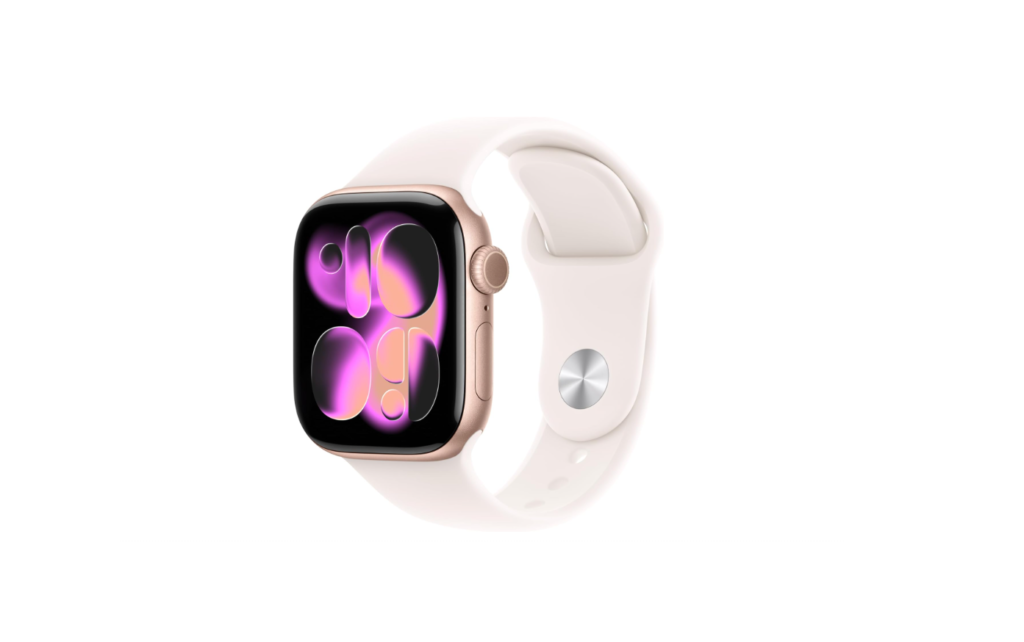
Apple Watch Series 11 [GPS 42mm] Smartwatch
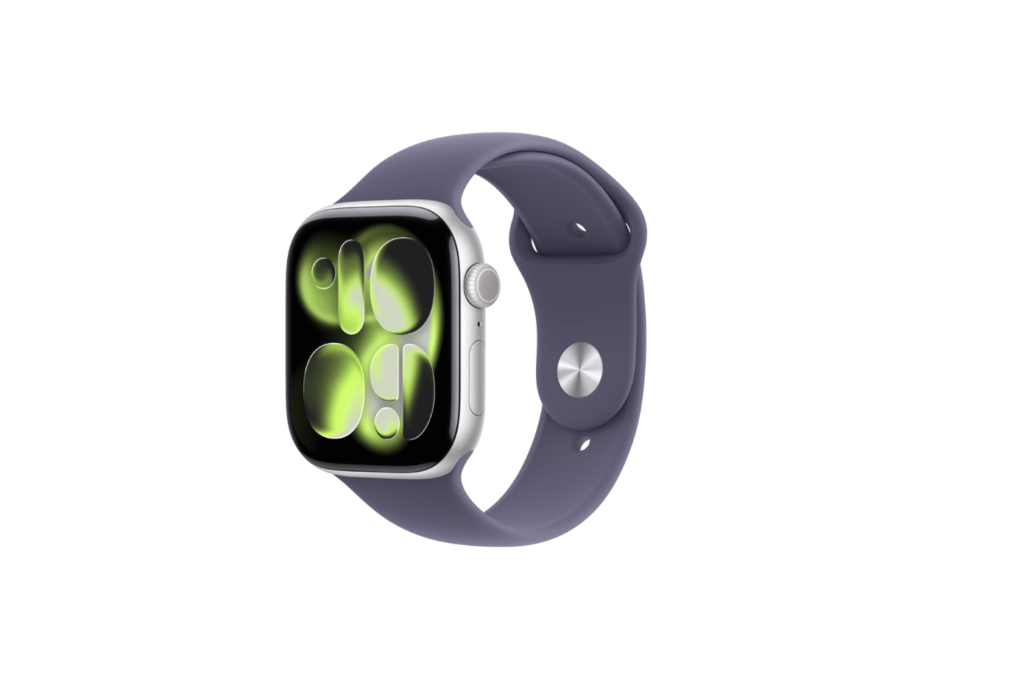
Apple Watch Series 11 [GPS 46mm] Smartwatch
For android ecosystem:
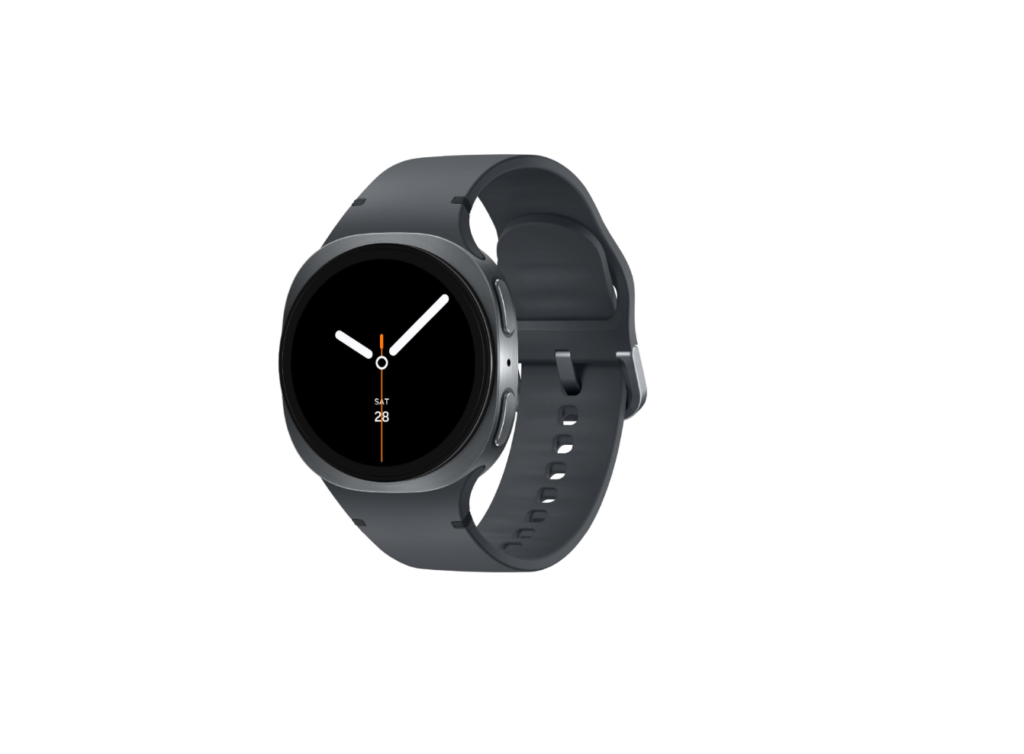
Samsung Galaxy Watch 8 Smartwatch (U.S. Version)
Furthermore, as medical experts have noted on platforms like WIRED.COM, the proliferation of mass-market cardiac alerts introduces a massive systemic issue: the risk of false positives. When thousands of perfectly healthy people over-interpret minor, transient heart rate spikes, it causes unnecessary anxiety and risks flooding the U.S. healthcare system, making it more difficult for individuals with genuine, life-threatening conditions to receive timely attention.
The Sleep Space: The 70% Accuracy Reality Check
Sleep optimization has become a massive sub-industry in the U.S. health space. Flagship smartwatches do a beautiful job of charting your sleep cycles, but you must take their colorful morning graphs with a grain of salt.
- Sleep vs. Wake Detection: Smartwatches are incredibly proficient (boasting 90% to 95% accuracy) at identifying when you are completely unconscious versus when you are actively moving around.
- The Sleep Stage Guess: When it comes to identifying the exact boundaries of Light, Deep, and REM sleep, accuracy drops sharply to 60% to 75%. Why? Because a wrist-bound tracker can only observe indirect physical surrogates—like Heart Rate Variability (HRV) and minute arm twitches—rather than reading the actual electrical brainwaves (EEG) captured during a clinical sleep study.
- The Insomnia Blindspot: If you deal with insomnia and spend an hour lying perfectly still in a dark room trying to calm your mind, your watch’s accelerometer will frequently assume you are sound asleep. This data gap can actively trigger a psychological phenomenon known as orthosomnia—the very real anxiety of trying to perfect a digital wellness score that doesn’t match your actual daily energy levels.
Where these devices excel clinically is in Sleep Apnea screening. By leveraging optical sensors to track blood oxygen saturation ($SpO_2$) drops alongside breathing disturbances during the night, certified models can flag moderate-to-severe respiratory risk profiles, providing an exportable PDF report that you can directly hand to your primary care physician.
For those looking for a comfortable wearable optimized for continuous overnight tracking and seamless PDF report exports, the Google Pixel Watch 4 delivers exceptionally clean baseline data without a mandatory monthly paywall.
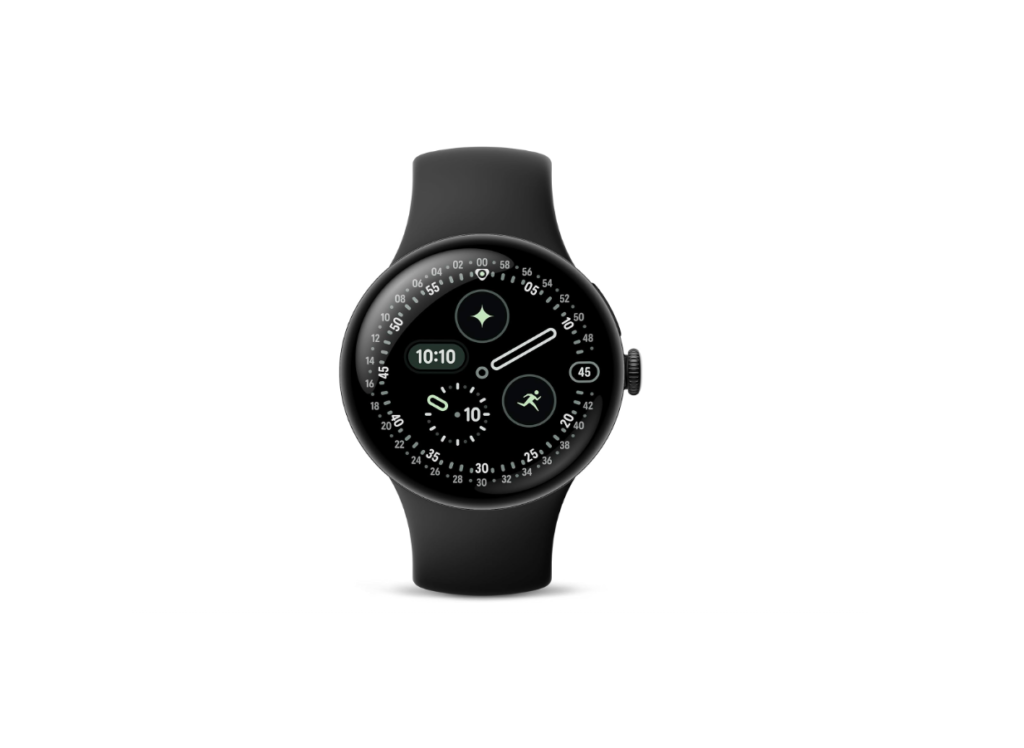
Google Pixel Watch 4 (45mm) – Android Smartwatch
Hardware Friction: The Physics of Your Wrist
Even the most advanced, medical-grade sensor algorithm is completely dependent on a simple physical reality: the clarity of the light passing through your skin. Most modern wearables rely on Photoplethysmography (PPG) sensors. They emit a continuous light beam into your dermis and read how much light bounces back; because blood absorbs specific light wavelengths, every pulse wave creates a microscopic change in the reflected signal.
THE PPG SENSOR LOOP:
| SIGNAL ABSORPTION | SIGNAL BLOCKAGE |
|---|---|
| Tattoo Ink (Dermis layer) | Dense Wrist Hair |
| High Melanin Density (Bypassed via Infrared AI) | Motion Artifacts (HIIT) (Creates ambient light gap) |
This introduces major real-world friction based on your body’s unique canvas:
- The Tattoo Barrier (High Interference): Dark ink pigments—especially deep blacks and solid blues—sit squarely in the dermis layer. Because these heavy pigments absorb the watch’s green light entirely, the sensor receives zero bounced-back data, frequently resulting in a total drop-off in tracking reliability.
- The Melanin Factor (Moderate Interference): Melanin naturally filters green light wavelengths, which historically caused optical sensors to miscalculate or drop signals on darker skin tones during high-intensity exercise. To solve this, premium 2026 flagships utilize adaptive AI to automatically ramp up LED brightness or dynamically switch to deep infrared wavelengths when a compromised signal is detected.
- Motion Artifacts: Dense wrist hair or a loose watch band can lift the chassis during erratic workouts, letting ambient room light bleed into the photodetector and tricking the watch into misinterpreting workout recovery as an acute emotional panic attack.
Data Sovereignty: Who Owns Your Biology?
When you gather weeks of continuous, intimate health data, you aren’t just building a workout history—you are building a highly valuable biological profile. The question of who has access to that profile is a critical differentiator across the industry.
| Brand | Paywall Model | Data Privacy Ecosystem |
|---|---|---|
| Apple | 100% Free Core Health Platform | Local End-to-End Encryption |
| Garmin | 100% Free Advanced Metrics | Private Secure Cloud Network |
| Google/Fitbit | Paywalled Advanced Trend Analytics | Legally Separated from Ad Engines |
| Whoop/Oura | Mandatory Monthly Subscription | Closed Loop Ecosystem |
The Invisible Monetization Trap
Major hardware manufacturers like Apple, Garmin, and Samsung explicitly detail in their modern U.S. privacy policies that they do not sell your personal health logs to health insurance providers or corporate advertisers. Apple goes an step further: if your device is secured with a passcode and two-factor authentication, your health matrix is completely end-to-end encrypted. Apple literally does not possess the decryption key.
The real danger to your data sovereignty doesn’t come from your hardware developer; it comes from the front door loophole.
Many major U.S. insurance providers offer premium discounts, gift cards, or complimentary smartwatches if you voluntarily link your device to their wellness incentive applications. Because consumer smartwatch data is not protected by HIPAA laws (which strictly govern medical institutions and doctors), the absolute moment you consent to sync your device with a third-party corporate app, that company legally owns the longitudinal data. They are completely within their legal rights to utilize that information to adjust long-term risk profiles or contest health claims later down the line.
To completely bypass this ecosystem anxiety while maintaining total data sovereignty, sports enthusiasts and longevity professionals overwhelmingly lean toward the Garmin Fenix Series, which locks advanced metrics entirely out of corporate advertising loops:
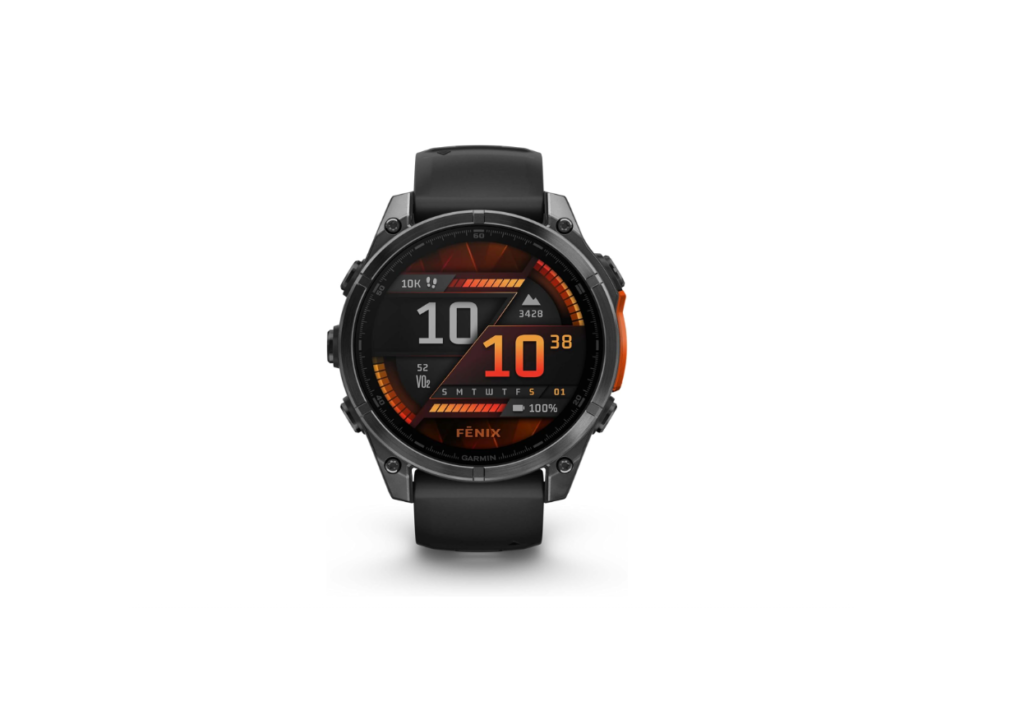
Garmin Fenix 8 47MM AMOLED Multisport GPS Smartwatch
Android Tier List: The Elite Health Monitors
If you are navigating the Android ecosystem and want cross-platform, medical-grade tracking accuracy without being locked into a rigid smartphone requirement, the 2026 landscape offers three clear, distinct standouts:
- The Clinical Maverick: Withings ScanWatch 2. For the user who values a classic horological aesthetic over a miniature smartphone screen, this hybrid device features real mechanical hands alongside an integrated digital display. It boasts an incredible 35-day battery life, delivering continuous, clinical-grade on-demand ECGs and proactive breathing disturbance logs without the daily charging anxiety that compromises baseline trends.
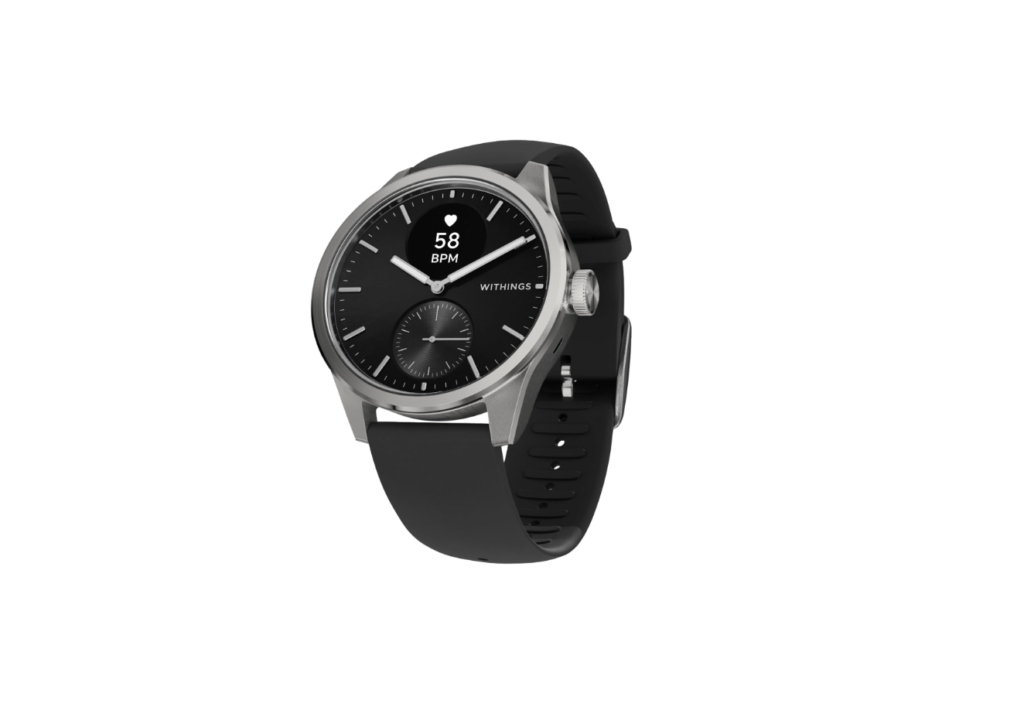
WITHINGS ScanWatch 2 – Hybrid Smart Watch
- The Unified Open Option: Google Pixel Watch 4. Built with an elegant, domed teardrop geometry, it integrates Fitbit’s deeply researched health metrics seamlessly across any modern Android device. It provides entirely free, FDA-cleared ECG monitoring, irregular rhythm notifications, and fast-charging capabilities that give you an 8-hour sleep tracking charge in under 15 minutes.
Google Pixel Watch 4 (45mm) – Android Smartwatch
- The Ecosystem Powerhouse: Samsung Galaxy Watch 8. A spectacular, feature-rich choice that includes advanced body composition analysis, sleep apnea alerts, and a cutting-edge antioxidant index to track physiological aging. The major caveat: To unlock its FDA-cleared ECG and blood pressure capabilities, it requires software authentication through a native Samsung Android device, making it less optimal if you utilize a Pixel or OnePlus smartphone.
Samsung Galaxy Watch 8 Smartwatch (U.S. Version)
Practicality Over Hype
When you step back from the promotional noise, the true value of a 2026 smartwatch isn’t its ability to act as an instantaneous diagnostic tool. Its real power lies in the luxury of consistent baseline trend analysis.
Your watch is a highly sophisticated companion that can spot subtle, systemic immune responses—like an overnight resting heart rate spike coupled with an HRV drop—to warn you of an oncoming illness up to 24 hours before you feel a single symptom. It can tell you when your central nervous system needs an active recovery day, and it can flag early cardiac and respiratory warning signs that warrant a trip to a real physician.
Invest in a smartwatch for its ability to cleanly capture your long-term biological trends, eliminate subscription friction, and seamlessly complement your lifestyle. But for a definitive diagnosis, always leave the final word to your doctor.
Expand Your Dynamic Tech Curation
Are you interested in discovering how other invisible form factors are completely shifting the health tracking space? Explore our comprehensive editorial feature on the Top Wearable Technology Trends in the U.S. for 2026 to see how smart rings and functional smart apparel are quietly redefining the luxury wellness ecosystem.