
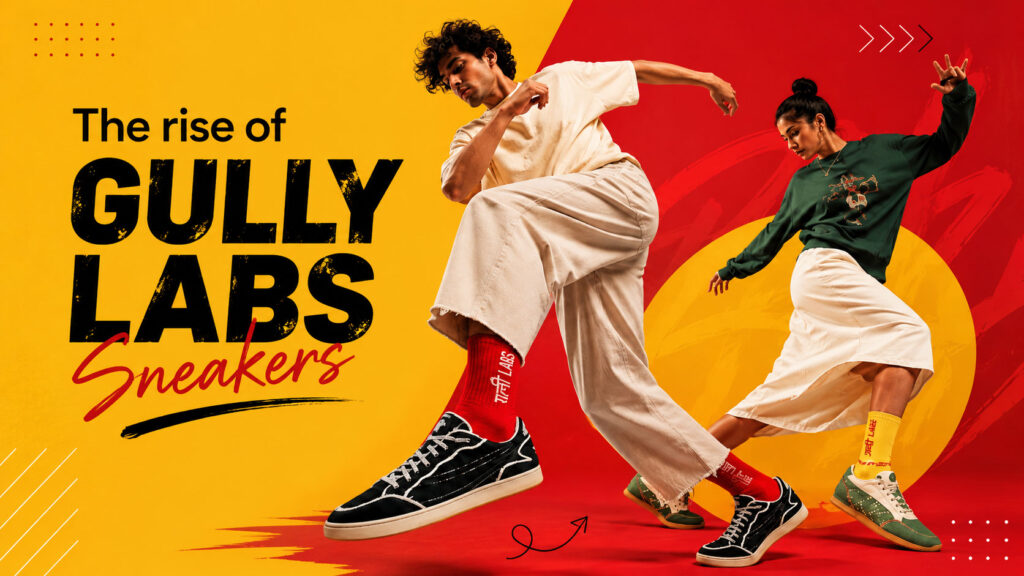
Most sneaker brands in India still operate with the same formula: copy a global trend, manufacture cheaply, run performance ads, and compete on discounts.
That is exactly why Gully Labs feels different. Gully Labs did not enter the market trying to become an Indian version of Nike, Adidas, or New Balance. The founders built something far more difficult — a sneaker brand rooted in Indian identity without making it feel forced, gimmicky, or costume-like.
That distinction matters.
Because for years, Indian consumers have been surrounded by products inspired by Western streetwear while barely seeing their own stories represented with the same design depth, pride, or cultural detail. Gully Labs recognized that gap early. And after their appearance on Shark Tank India, the brand moved from niche sneaker conversations into mainstream cultural attention.
But the Shark Tank deal is not the real story here. The real story is how two founders from Gurugram built one of India’s most culturally aware sneaker brands in less than three years by understanding something most brands completely ignore: People no longer buy sneakers only for comfort or fashion.
They buy them for identity.
Table of Contents
Gully Labs Did Not Start as a “Sneaker Company”
The company was founded by Arjun Singh and Animesh Mishra in 2023 with a very specific vision:
build a sneaker brand that feels unapologetically Indian.
Not “Indian” in the stereotypical export-market sense.
Not elephants, random paisley patterns, or Bollywood nostalgia.
Their manifesto openly criticizes how Indian brands often seek validation from Western aesthetics instead of building original cultural narratives of their own. The founders questioned why Japanese streetwear, New York hip-hop culture, French luxury, or American skate culture became globally influential movements while Indian stories remained commercially underrepresented.
That philosophy became the foundation of Gully Labs Sneakers.
Their designs pull references from:
- Bharatanatyam
- Kolhapuri weaving
- Indian hockey history
- local street culture
- underground music
- community identities
- regional craftsmanship
This is what separates them from generic “Made in India” branding. Most brands manufacture in India.
Very few actually design from India.
Why Gully Labs Connected So Fast With Young Consumers
Timing played a huge role. India’s sneaker market is changing rapidly. Sneakers are no longer just footwear. They sit at the intersection of:
- fashion
- culture
- social identity
- internet communities
- creator economy
- self-expression
Global sneaker culture already proved this years ago. What Gully Labs understood is that Indian consumers were finally ready for a homegrown brand that reflected their own stories with the same confidence global brands project internationally.
Their early traction validates that insight. Within the first few months:
- they landed a Vogue feature
- hosted community-led events
- built viral Mosa media momentum
- created a strong digital identity
Unlike traditional D2C brands that rely heavily on performance marketing, Gully Labs built conversation first. That is a completely different growth engine.
The Biggest Difference: Community Before Commerce
This may be the most important reason behind the brand’s growth.
Most fashion startups still operate transactionally:
sell products → run ads → chase CAC efficiency → repeat.
Gully Labs behaves more like a culture-first community brand.
Their products carry stories.
Their collections have context.
Their campaigns feel conversational rather than corporate.
Even their retail expansion is being designed around “cultural spaces” instead of pure stores.
That strategy is extremely modern.
Globally successful lifestyle brands like:
- Supreme
- Deus Ex Machina
- Aimé Leon Dore
- Stüssy
…all became powerful because they represented communities before they became fashion businesses. India has historically lacked large-scale brands operating in this emotional territory.
Gully Labs is attempting exactly that. And the market response suggests people were waiting for it.
Shark Tank India Changed Gully Labs Visibility — Not Their Direction
One important thing about Gully Labs:
they were already building strong momentum before appearing on Shark Tank India. By the time they entered the show:
- the company had operational manufacturing
- a growing customer base
- strong storytelling
- global traction
- premium positioning
On Shark Tank India, the founders reportedly asked for ₹1 crore at a ₹200 crore valuation and eventually closed a deal with Aman Gupta at approximately ₹175 crore valuation. That episode massively amplified awareness. But what impressed investors was not just revenue.
It was clarity.
The founders understood:
- who they are building for
- why the brand exists
- how Indian culture can become commercially aspirational
- why storytelling creates stronger retention than trend copying
Most early-stage fashion brands struggle to articulate that. Gully Labs built the entire company around it.
Their Manufacturing Strategy Is Smarter Than Most D2C Brands
One underrated aspect of Gully Labs Sneakers is operational control. The company manufactures in-house through its own facilities in Noida. That gives them advantages across:
- product experimentation
- quality control
- limited releases
- faster iteration
- craftsmanship consistency
Their sneakers are hand-lasted before machine stitching — a process usually associated with more premium footwear construction. This is important because culture-first branding only works if the product quality supports the narrative.
Otherwise the brand becomes aesthetic marketing without substance. Gully Labs seems aware of that risk.
Their positioning combines:
- storytelling
- craftsmanship
- material quality
- design differentiation
- limited batch thinking
That combination is difficult to replicate quickly.
The Numbers Behind the Hype
The growth trajectory is aggressive. According to publicly available reports and founder disclosures:
- FY24 revenue: approximately ₹20 lakh
- FY25 revenue: around ₹2.9 crore
- FY26 YTD revenue: approximately ₹9 crore
- monthly sales reportedly crossed ₹1.85 crore
The company also claims:
- 25% international sales contribution
- strong traction in the US and UK
- offline retail expansion plans
- over 150 team members including artisans and corporate staff
In 2026, Gully Labs additionally raised around ₹30 crore in Series A funding led by Saama Capital. That level of investor confidence is significant for an Indian sneaker-first brand still in its early lifecycle.
If you are considering Gully Labs Sneakers: Do check our selection:
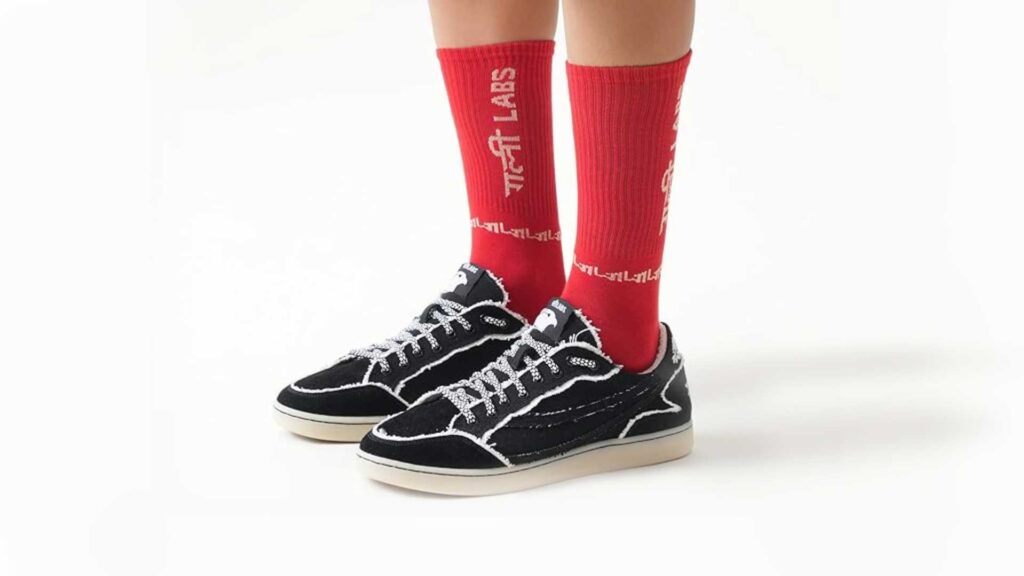

What Gully Labs Actually Understood About the Market
This is where the brand becomes interesting beyond fashion. Most companies entering Indian streetwear focus on aesthetics alone. Gully Labs focused on emotional positioning. That is a much stronger moat. Because consumers today are overloaded with products but starved for meaning.
People want brands that:
- represent identity
- create belonging
- reflect roots
- feel culturally aware
- stand for something specific
Especially younger consumers. And especially in categories like sneakers where personal expression matters heavily. Gully Labs Sneakers are succeeding because they are not selling “Indian products.” They are selling cultural confidence. That difference changes everything.
The Brand Is Quietly Building a Larger Lifestyle Ecosystem
Another smart move: they do not view themselves only as a footwear company. The founders have already discussed expansion into:
- apparel
- fragrances
- accessories
- open footwear
- offline cultural experiences
This matters because long-term lifestyle brands are rarely built through a single product category. They are built through shared identity systems. Once consumers emotionally connect with the philosophy, the brand can expand naturally across categories. That is how streetwear brands evolve into cultural ecosystems.
What Sneaker Buyers Can Learn From Gully Labs
This directly connects back to the larger conversation around how to choose sneakers.
A good sneaker is no longer only about:
- cushioning
- trend appeal
- resale value
- logo recognition
The best sneakers usually communicate something personal.
That could be:
- culture
- design philosophy
- craftsmanship
- individuality
- community alignment
Gully Labs Sneakers work because they combine all five. And this is exactly why thoughtful sneaker buying matters. When choosing sneakers today, people increasingly look for:
- originality
- story
- emotional connection
- quality construction
- long-term wearability
Not just hype. That shift is creating space for brands like Gully Labs to grow rapidly despite competing in a category dominated by global giants. If you want a deeper breakdown of what actually matters while selecting sneakers — from craftsmanship to comfort to design identity — read our pillar guide on:
Because brands like Gully Labs are proving that the future of sneakers is not just performance. It is perspective.
Final Thoughts
Gully Labs did not become relevant because they appeared on Shark Tank India. They became relevant because they identified a cultural gap most brands failed to notice.
India has always had:
- stories
- craftsmanship
- underground culture
- artistic depth
- design inspiration
What it lacked was modern brands capable of translating those elements into products people genuinely wanted to wear. That is what Gully Labs Sneakers are attempting to build. And whether you look at them from:
- a sneaker enthusiast perspective,
- a branding perspective,
- or a startup analysis perspective,
The company represents something bigger than footwear. It represents a new generation of Indian brands that are no longer trying to imitate global culture. They are trying to contribute to it.
Also read:
- Top Wearable Technology Trends in the U.S. for 2026
 Wearable technology trends in the U.S. is no longer limited to counting steps or checking notifications during workouts. In 2026,… Read more: Top Wearable Technology Trends in the U.S. for 2026
 - How Gully Labs Sneakers Built a Brand with Identity after Appearing on Shark Tank India
 Most sneaker brands in India still operate with the same formula: copy a global trend, manufacture cheaply, run performance ads,… Read more: How Gully Labs Sneakers Built a Brand with Identity after Appearing on Shark Tank India
 - Kindle Paperwhite Review: The Best Device for Building a Reading Habit?
 Modern life is filled with friction. Not physical friction — mental friction. Every app wants attention. Every device wants engagement.… Read more: Kindle Paperwhite Review: The Best Device for Building a Reading Habit?
 - 3 Elegant Summer Looks for Women in 2026 That Feel Minimal Yet Luxurious
 Summer Looks for women in 2026 is shifting towards effortless elegance, wearable luxury, and statement styling without unnecessary excess. Instead… Read more: 3 Elegant Summer Looks for Women in 2026 That Feel Minimal Yet Luxurious
 - Modern Mom Gift Ideas That Feel Deeply Personal
 How do you think of Modern Mom Gift Ideas That Feel Deeply Personal.Most people still misunderstand modern motherhood. A mother… Read more: Modern Mom Gift Ideas That Feel Deeply Personal